
Not all workplace hazards are visible. In industrial environments, dangerous gases can accumulate without obvious signs, creating risks for workers, equipment, and surrounding areas. From manufacturing workshops to chemical plants and construction sites, effective gas detection plays an important role in workplace safety and environmental monitoring.
Understanding which gases may be present is the first step toward choosing the right monitoring solution.
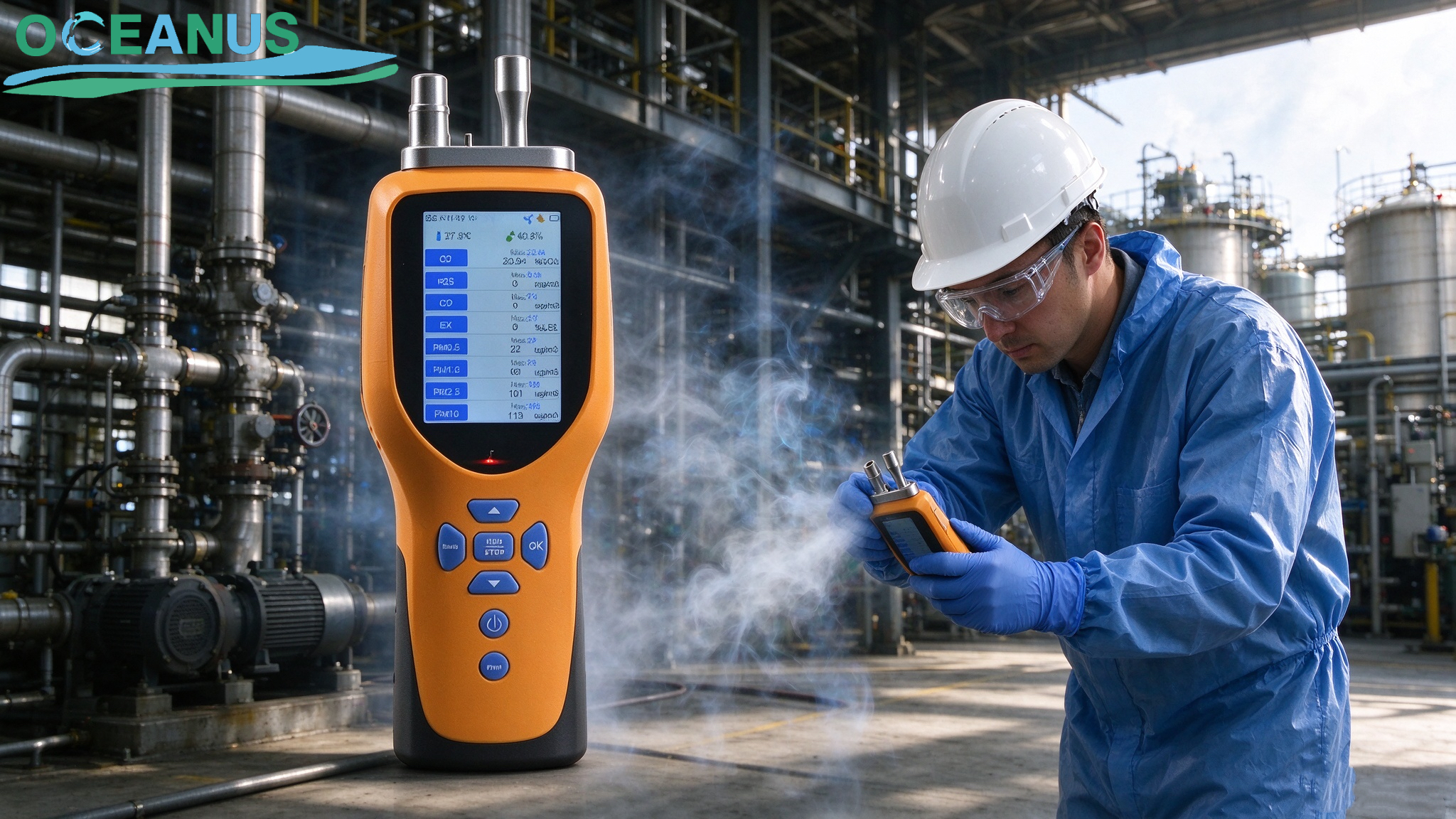
Combustible gases such as methane, propane, and hydrogen can create fire or explosion hazards when they accumulate and reach certain concentrations. Leaks may occur around gas pipelines, storage tanks, fuel systems, or during equipment maintenance.
Gas monitoring is particularly important in oil and gas facilities, chemical plants, fuel stations, and industrial production areas where combustible gases may be present.
Some gases can be harmful even at relatively low concentrations. Common examples include carbon monoxide (CO), hydrogen sulfide (H₂S), chlorine (Cl₂), and ammonia (NH₃).
They may be generated by industrial processes, chemical reactions, wastewater treatment, or equipment failures. Depending on the gas and exposure conditions, workers may face serious health risks. Appropriate gas detection helps identify potential hazards and supports timely safety measures.
Oxygen levels are another important factor in workplace safety. Oxygen deficiency may occur in confined spaces, storage tanks, underground facilities, or areas where gases displace normal air. Oxygen enrichment can also increase fire risks.
Before and during work in confined spaces, oxygen monitoring should be considered as part of a comprehensive safety procedure, together with risk assessment, ventilation, and appropriate work permits.
Carbon dioxide is commonly associated with climate change, but elevated concentrations can also create workplace safety concerns. CO₂ may accumulate in fermentation facilities, food and beverage production areas, laboratories, and poorly ventilated enclosed spaces.
Monitoring CO₂ levels can help organizations understand indoor or process-related conditions and identify situations that may require improved ventilation.
VOCs are released by many products and industrial processes, including paints, coatings, adhesives, cleaning agents, and solvents. Some VOCs can affect human health, while certain compounds may also contribute to fire risks.
They are especially relevant in painting workshops, printing facilities, chemical production, and manufacturing environments where solvents are used.
Different projects have different monitoring requirements. Before selecting an instrument, buyers should consider:
l Gas selection: Which gases need to be monitored? Can the sensor combination be customized for the application?
l Sampling method: Is pump-suction sampling required for remote or hard-to-reach locations?
l Alarm functions: Does the instrument provide clear alerts when gas concentrations reach preset thresholds?
l Data management: Can measurement records be stored and transferred for reporting and project documentation?
l Environmental conditions: Is the instrument suitable for the temperature, humidity, and working conditions of the site?
For contractors and organizations managing multiple projects, a configurable instrument can help simplify equipment selection and field operations.
The Oceanus OC-1000 Portable Multi-Gas and Dust Particle Detector is designed to support a range of industrial monitoring requirements.
It supports up to seven sensor positions, including a temperature and humidity sensor. Depending on the configuration, it can accommodate up to six gas sensors without a particle sensor, or up to five gas sensors when the optional particle sensor is installed. Sensor combinations can be customized according to project requirements.
The instrument features built-in pump-suction sampling with adjustable suction strength, helping users collect gas samples during on-site inspections. Its audible, visual, and vibration alarms, together with adjustable two-stage alarm thresholds, provide multiple ways to alert users.
For data management, the OC-1000 can store up to 100,000 groups of measurement records, which can be transferred to a computer using supporting software. An optional particle sensor supports particle-size channels of 0.5 μm, 1.0 μm, 2.5 μm, and 10 μm, offering additional monitoring options for projects that require both gas and particulate matter measurement.
With a portable design, configurable sensors, and optional particle monitoring, the OC-1000 can be considered for industrial inspections, chemical facilities, construction projects, and environmental monitoring services.
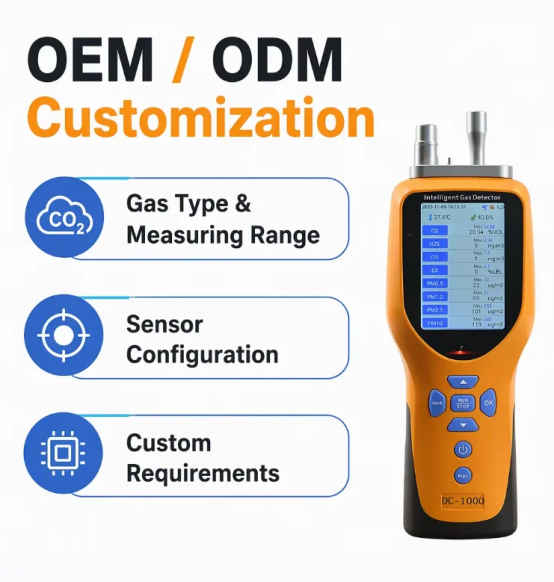
There is no single sensor combination suitable for every industrial environment. The right choice depends on the target gases, site conditions, and monitoring objectives.
Oceanus provides configurable monitoring solutions for different project requirements. Contact our team to discuss your application and identify a suitable OC-1000 configuration.
Whatsapp: +86 15981942832
Email: info@china-oceanus.com
Contact:Oceanus Team
Mobile/WhatsApp:+86 15981942832
Mobile/WhatsApp:+86 13673683950
E-mail:info@china-oceanus.com
Add:No.923, Floor 9, Unit 2, NO.78, Shangding Road, Zhengzhou, China
 Oceanus